
What should I consider when landscaping around my septic system?
SepticFactsPublished Updated
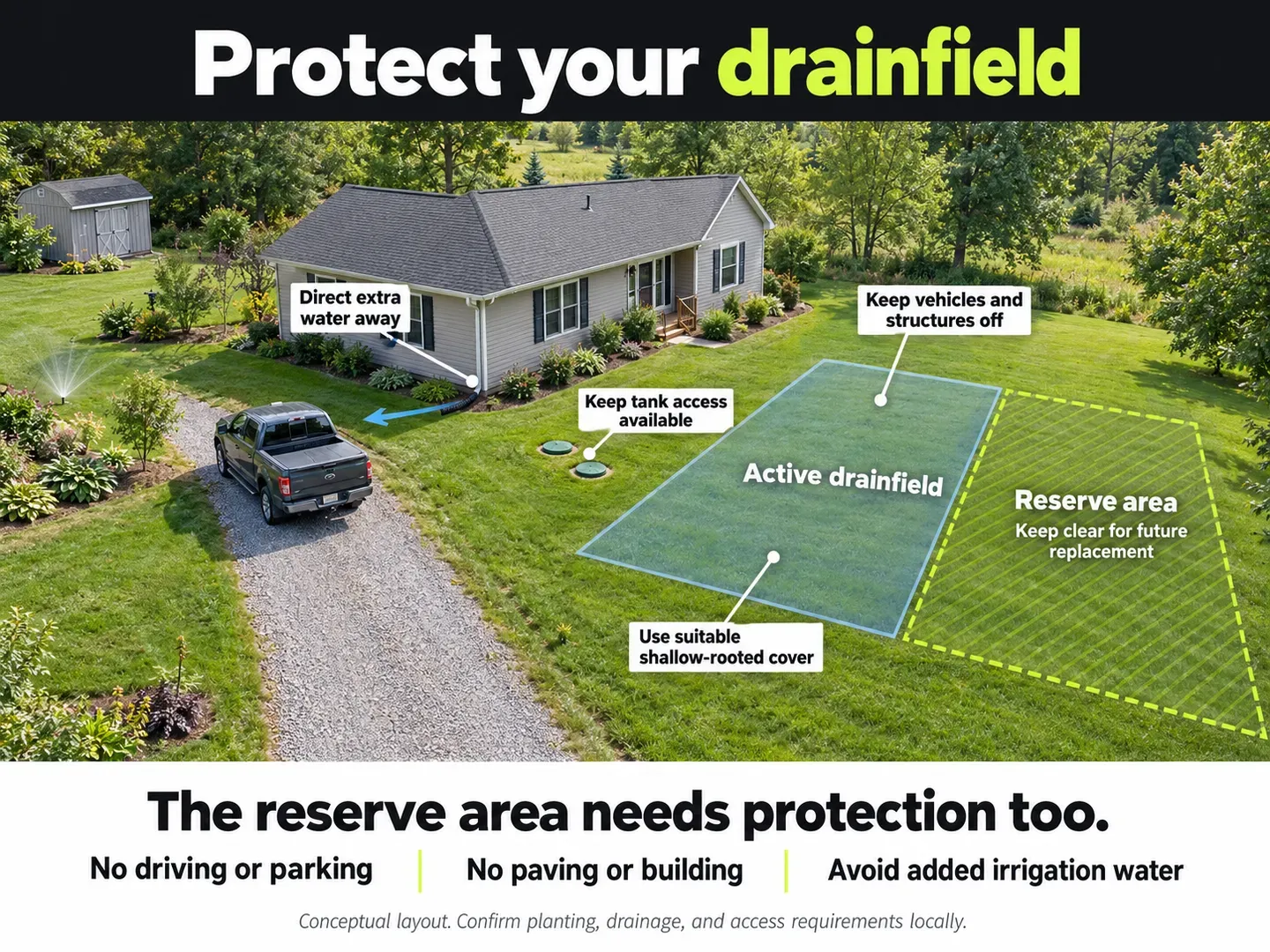
The goal is to keep the drainfield open, dry and light, and the tank reachable. Following EPA’s guidance: plant only grass or shallow-rooted ground cover over the drainfield; keep trees and shrubs far enough away that roots cannot reach the pipes; skip vegetable gardens over the drainfield, since produce can be exposed to effluent; point roof drains, sump pumps and irrigation away from it; and keep vehicles and heavy equipment off.1 Beyond that, avoid adding soil, raised beds, patios, sheds, play structures or pavers over the drainfield or reserve area, since they change drainage and block access, and do not regrade the area without checking with the county. Leave the tank lids and any pump or alarm panel easy to find and uncovered, and mark them on your as-built so a future landscaper does not dig into the lines.
Citations
-
U.S. EPA, How to Care for Your Septic System; U.S. EPA SepticSmart, Proper Landscaping On and Around Your Septic System; University of Florida IFAS Extension, Landscaping on or near Septic Drain Fields; University of Missouri Extension, Household Wastewater: Septic Systems (EQM104F). ↩
The agency that issues septic permits where the lot is makes the final call on what system your lot can use.
Sources
- How to Care for Your Septic SystemU.S. Environmental Protection Agency (federal)Corroborated; confirm with the authority. Checked
- Proper Landscaping On and Around Your Septic System (SepticSmart, EPA-832-F-14-009)U.S. Environmental Protection Agency (federal)Corroborated; confirm with the authority. Checked
- Landscaping on or near Septic Drain Fields (SL474)University of Florida IFAS Extension (state university extension)Corroborated; confirm with the authority. Checked
- Household Wastewater: Septic Systems (EQM104F)University of Missouri Extension (state university extension)Corroborated; confirm with the authority. Checked
Check a specific lot
SepticFacts screens one lot against public soil, flood, wetland and slope data and the local septic rules we have on file, with every source cited.
Check a lot