
How does a sloped property affect my drainfield?
SepticFactsPublished Updated
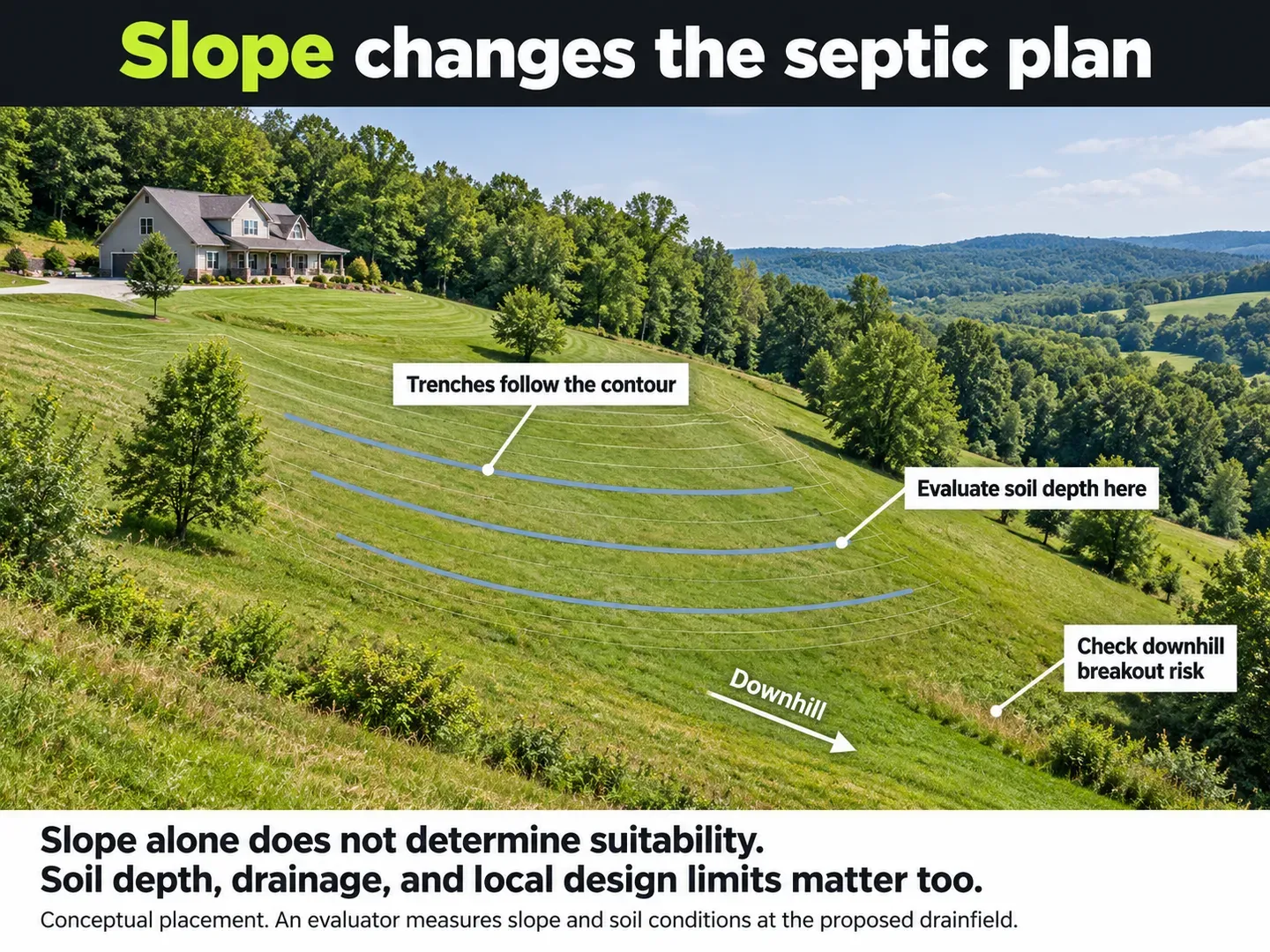
Some slope is helpful, since gravity moves effluent without a pump. Too much slope thins the usable soil, makes it hard to keep trenches level along the contour, and raises the risk of effluent surfacing downhill. Design rules can tighten as slope increases. In Oregon, for example, the drainfield needs 25 to 50 feet of setback from cuts and escarpments.1 Other rules, such as trenches that follow the contour, or deeper soil or a pressurized system on steeper ground, vary by state and county, so check with the agency that issues septic permits where the lot is.
Citations
-
Oregon Department of Environmental Quality, OAR 340-071-0220 Table 1 (cuts and escarpments), published in OAR 340-071-0800, official text from the Oregon Secretary of State; Columbia County, Oregon, Public Health, Site Evaluation Information. ↩
The agency that issues septic permits where the lot is makes the final call on what system your lot can use.
Sources
- OAR 340-071-0800, Division 71 Tables (Table 1 of OAR 340-071-0220, Minimum Separation Distances)Oregon Department of Environmental Quality (state); official rule text published by the Oregon Secretary of StateCorroborated; confirm with the authority. Checked
- Site Evaluation InformationColumbia County, Oregon, Public Health (county)Corroborated; confirm with the authority. Checked
Check a specific lot
SepticFacts screens one lot against public soil, flood, wetland and slope data and the local septic rules we have on file, with every source cited.
Check a lot