
When can I use an existing system?
SepticFactsPublished Updated
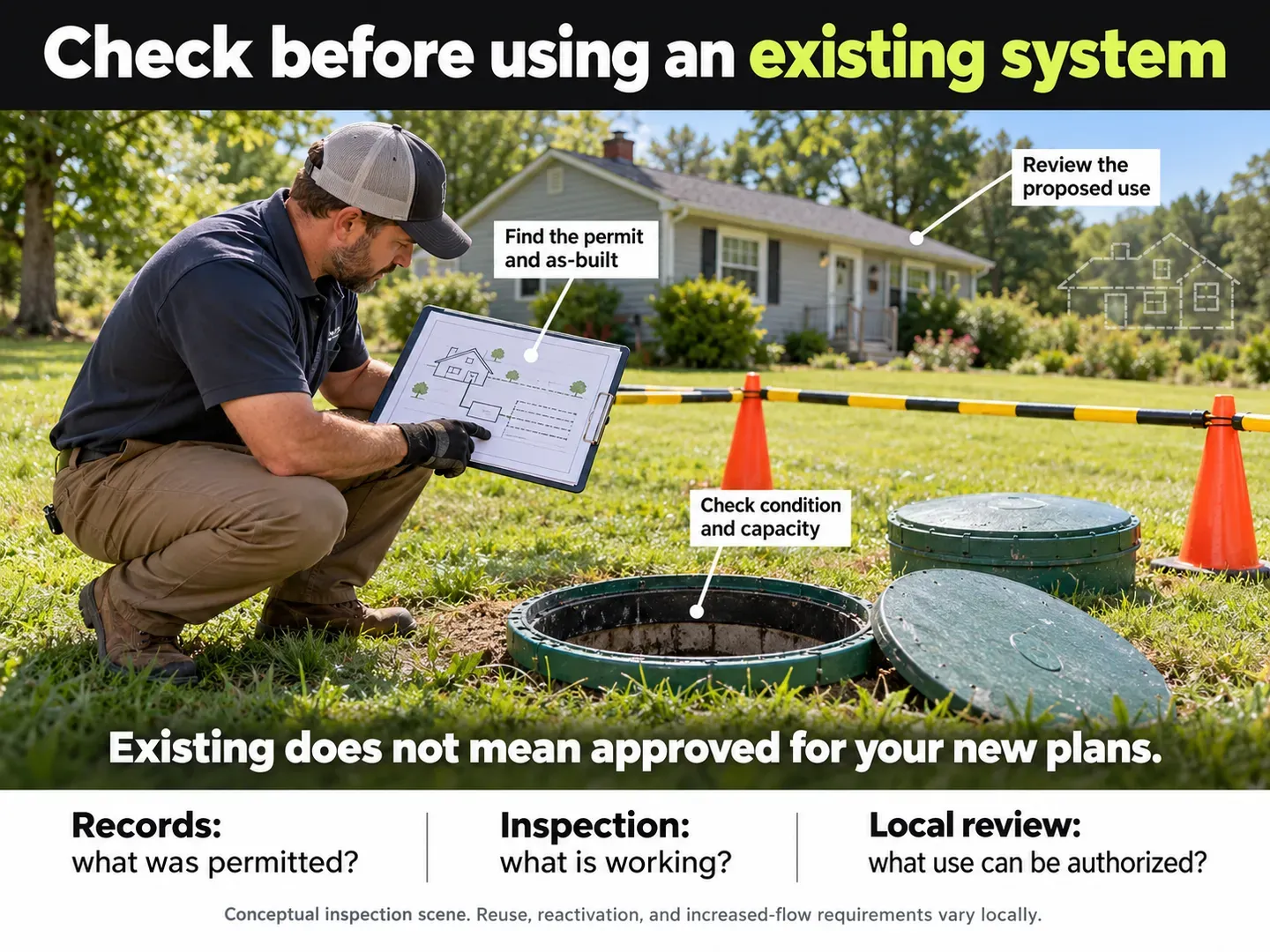
Often, if it is working, it is sized for what you plan, and the setbacks still hold. Some states have a process for approving continued use of an existing system and a threshold that triggers a new permit; rules vary by state and county, so check with the agency that issues septic permits where the lot is. Oregon, as a worked example, lets the county issue an authorization notice to keep using an existing system when it is not failing, setbacks can be met, and sewage flow will not increase beyond its design (OAR 340-071-0205).1 Modest increases can be approved when there is room for a replacement area; larger increases, such as a bigger house or more bedrooms, require a new permit and usually an upgrade.1 Replacing a house on an old system, adding a bedroom or ADU, or changing use are the common triggers. Some states make the check mandatory at sale: Massachusetts requires a system inspection at or within two years before a property changes hands (310 CMR 15.301),2 and some counties elsewhere have point-of-sale inspection rules. Where it is not required, do it anyway: before buying, ask the seller or county for the permit record and as-built, and get the system inspected and the tank pumped.
Citations
-
Oregon Department of Environmental Quality, OAR 340-071-0205, official text published by the Oregon Secretary of State; Marion County, Oregon, Authorization to Use an Existing System. ↩ ↩2
-
Massachusetts Title 5 (310 CMR 15.301), as administered by local boards of health: Town of Conway Board of Health, Title 5 Septic Inspections; Town of Hampden Board of Health FAQ. ↩
The agency that issues septic permits where the lot is makes the final call on what system your lot can use.
Sources
- OAR 340-071-0205, Authorization to Use Existing SystemsOregon Department of Environmental Quality (state); official rule text published by the Oregon Secretary of StateCorroborated; confirm with the authority. Checked
- Authorization to Use an Existing System (handout MC S-03)Marion County, Oregon, Public Works Building Inspection Division (county)Corroborated; confirm with the authority. Checked
- Title 5 Septic InspectionsTown of Conway, Massachusetts, Board of Health (town)Corroborated; confirm with the authority. Checked
- Board of Health FAQ, Title 5 inspectionsTown of Hampden, Massachusetts, Board of Health (town)Corroborated; confirm with the authority. Checked
Further reading
- 310 CMR 15.301, Inspection at TransferMassachusetts Department of Environmental Protection (state); secondary copy hosted by Cornell Legal Information InstituteUnverified; confirm with the authority. Checked
Check a specific lot
SepticFacts screens one lot against public soil, flood, wetland and slope data and the local septic rules we have on file, with every source cited.
Check a lot